Multiply by 10
key notes :
What does it mean?
Multiplying a number by 10 means adding one zero to the end of the number.
Example:
- 4 × 10 = 40 ✅
- 7 × 10 = 70 ✅
Using place value
When we multiply by 10, each digit moves one place to the left.
Example:
- 23 × 10 → 2 moves to hundreds, 3 moves to tens → 230 ✅
Multiplying with single-digit numbers
Easy to remember: just add a zero at the end.
Example:
- 8 × 10 = 80
- 5 × 10 = 50
Multiplying with two-digit numbers
Write the number first, then add a zero.
Example:
- 12 × 10 = 120
- 35 × 10 = 350
Tip / Trick:
- Think: “10 times bigger” → so number grows ten times.
- Example: 6 × 10 = 60 → 6 is now ten times bigger.
Visual Example:
Using objects:
- 3 boxes × 10 apples = 30 apples 🍎🍎🍎… (10 apples in each box)
Common Mistake to Avoid:
- Don’t just add 1; you must add a zero or shift digits.
- Wrong: 4 × 10 = 14 ❌
- Correct: 4 × 10 = 40 ✅
Learn with an example
Multiply.
4 × 10 =?
This array shows that 4 × 10 = 40. It has 4 rows with 10 dots in each row.

There are 40 dots in all.
4 × 10 = 40
Multiply.
4 × 10 =?
This number line also shows that 4 × 10 = 40. Count by 10s on the number line. Count forward 4 times.
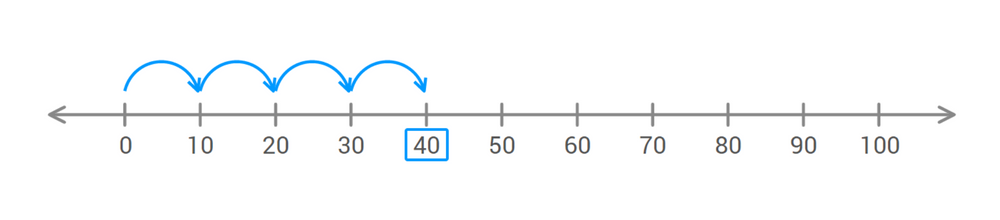
The last arrow ends at 40.
4 × 10 = 40
Multiply.
5 × 10 =
This array shows that 5 × 10 = 50. It has 5 rows with 10 dots in each row.
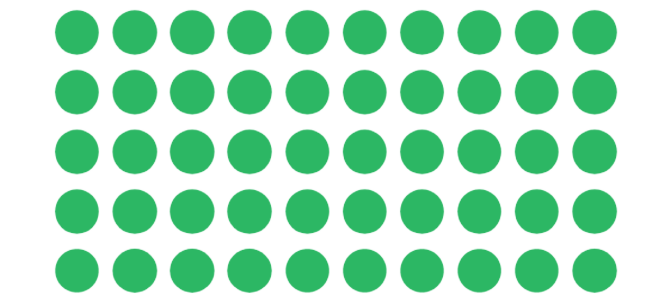
There are 50 dots in all.
5 × 10 = 50
This number line also shows that 5 × 10 = 50. Count by 10s on the number line. Count forward 5 times.

The last arrow ends at 50.
5 × 10 = 50
let’s practice!